


Repair and maintenance of Teflon-coated molds
We repair and maintainnemaintain molds with Teflon-coated to optimize your production and ensure the quality of your final products. Extend the servicelife of your trays and holders with our high-quality nonstick coatings designed for the baking industry, packaging, and many others. Invest in savings, quality and durability!
Why choose our mold repair and maintenance service?
Constant use, exposure to high temperatures and sudden changes in temperature affect the service life of bread molds, chemical containers, platforms and supports in all types of industrial sectors… For this reason, our Teflon-coated maintenance and repair with Teflon coating of parts and molds for the food sector as well as for many others, we can extend the baking cycle and the period of use of your equipment.
We guarantee the efficiency and quality of your production processes without the need to invest in new equipment. We have different types of different types of coatings to adapt to your product and your needs..
At REKLIN we have our own workshop with advanced technology which allows us to to recover, repair and maintain molds and trays in the bakery, bakery and confectionary and trays for the bakery, bakery and confectionery sector in an efficient way.
Opt for an efficient solution without the need to replace your tools.
We have innovative machinery and efficient treatments to ensure high quality in the maintenance and repair of trays and molds for bread, pastries, bakery, pastry… Save by not having to buy new equipment and increase the useful life of the ones you already have.
Extend the life of your industrial molds
Restore the non-stick, anti-corrosion and release properties of your trays and supports with our service of maintenance and repair of molds with teflonized. You can extend the useful life of your production equipment and use them as as like new, without the the need to invest in new tools and avoid constant replacements.
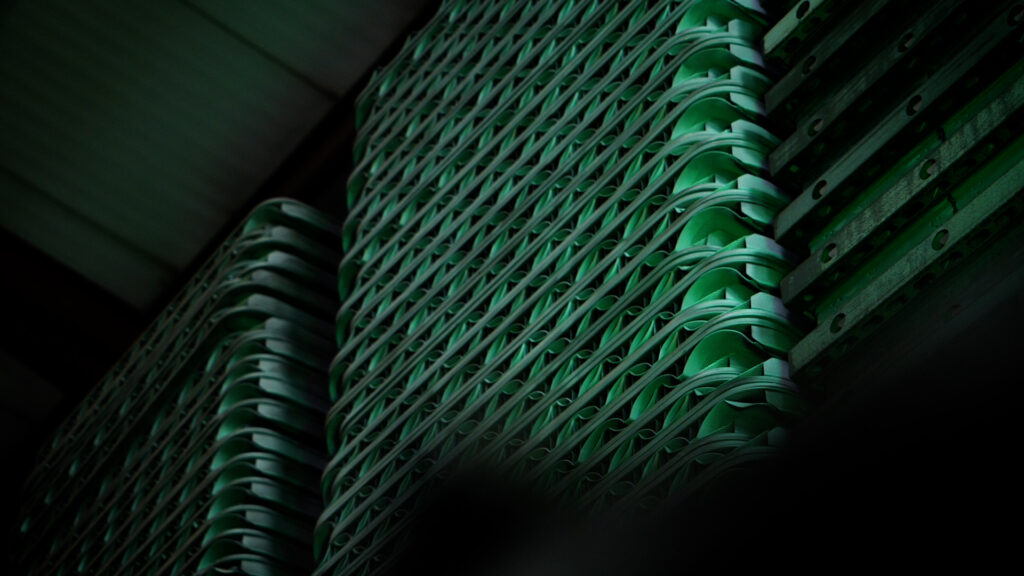
High-quality Teflonized treatment for increased durability
At REKLIN, we apply high-quality Teflon coatings to remove the old coating, restore the non-stick properties, and ensure quality of the final product. We offer different types of coatings to suit the specific industry and the durability required in each case.
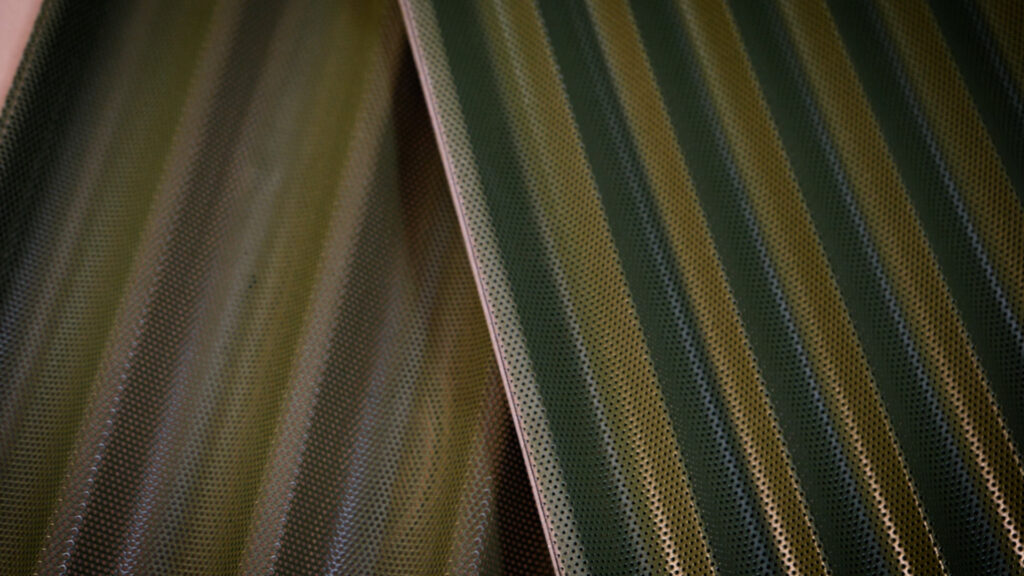
Quality control: adhesion and durability verification
By applyingr teflon coating for non-stick coating on molds, containers or supportswe check every piece of equipment for ensure that it has been properly bonded, we test for resistance to high temperatures and friction. This is essential for guarantee a effi cient repair and maintenance servicecient.
Frequently asked questions about Teflon coating of molds
Invest in the maintenance and re-Tefloning of your molds and pans for sliced bread, toast, hamburger buns, breadsticks, pastries, and all types of industrial baked goods, and ensure uniform, consistent, and precise baking batch after batch.
We specialize in reconditioning nonstick surfaces for high-volume production lines, restoring their nonstick properties, improving quick and clean release, and extending the service life of trays and racks to achieve more baking cycles with consistent results.
In addition, we repair and maintain your trays and racks so you can continue to use them efficiently, reducing downtime and waste and avoiding the need for immediate investment in new equipment.
What does the repair and maintenance of Teflon-coated molds involve?
This is a process designed to restore the mold’s nonstick properties and performance. It typically involves removing the old coating if it has deteriorated, preparing the surface, and applying a new, high-quality nonstick coating to improve demolding, cleanability, and durability.
When is it better to re-coat a mold with Teflon instead of replacing it?
When the mold is structurally sound (it is not warped or irreversibly damaged) but exhibits sticking, loss of nonstick properties, wear, persistent stains, or a decline in performance, re-Tefloning is usually cost-effective if you want to extend its service life and stabilize production.
What types of molds and trays can be repaired with Teflon coating?
Metal molds, trays, utensils, and industrial parts used in applications requiring non-stick properties—such as bread-making, pastry-making, confectionery, and food processing—as well as non-food industrial applications where non-stick properties and durability are required, can be Teflon-coated and maintained.
Is Teflon coating only used in industrial baking?
No. In addition to food applications, it is used in industries where the goal is to prevent product adhesion, improve glide, or protect surfaces from chemicals and friction: packaging, material handling, thermal processes, etc. The key is to choose the right coating for each application.
How is the quality of the applied coating ensured?
- Better release from the mold and less product sticking.
- Less waste and a better-finished product.
- Faster cleaning and less downtime.
- Potential reduction in oils/release agents.
- Longer tool/mold service life and greater process stability.
Does the nonstick coating withstand high temperatures?
Yes, if the right system is selected. Fluoropolymer coatings are designed to operate at high temperatures, but their performance depends on the actual temperature, exposure times, and temperature peaks, as well as the type of cleaning and abrasion.
How long does a Teflon-coated pan last before it needs maintenance?
There is no single figure. It depends on: the number of cycles, abrasion, the type of product, temperature, the use of metal utensils, cleaning chemicals, and the washing method. With proper use and adequate cleaning, the service life is extended; with high abrasion or aggressive cleaning, it is shortened.
What are the signs that my pan needs maintenance or to be re-coated with Teflon?
- Product sticking or uneven demolding.
- Increased waste, breakage, or finish defects.
- Cleaning is becoming increasingly slow or impossible in certain areas.
- Appearance of streaks, dull spots, or visible wear.
- More oil/release agent is needed to “compensate.”
Can a mold be repaired if the old Teflon coating is severely worn?
Yes. The standard procedure is to remove the old coating, recondition the surface, and apply a new coating system. The limit is determined by the condition of the substrate: if the mold is warped, cracked, or has deep damage, it may require prior mechanical repair or replacement.
What does the re-tefloning service typically include?
It typically includes: evaluation, stripping/removal of the previous coating, surface preparation, application of the coating, curing, and final inspection. In some cases, guidelines for use and cleaning are also recommended to maximize the coating’s lifespan.
What are the advantages of repairing molds versus buying new ones?
Primarily, it results in cost savings, reduced downtime, extended service life, and restored performance without changing the tool’s format. It also helps maintain consistent quality and prevent variations caused by new molds with different tolerances.
What type of cladding is best for my situation?
It depends on: temperature, abrasion, type of dough/product, the presence of sugar/caramelization, cleaning chemicals, washing frequency, and intended service life. Ideally, you should choose a system that strikes a balance between nonstick properties, durability, and ease of cleaning.
Does Teflon coating improve productivity on high-volume production lines?
Yes, because it reduces jamming, facilitates demolding, shortens cleaning times, and reduces defects. On lines with many cycles, the typical improvement is seen in consistency, fewer incidents, and higher actual operating speed.
How should I clean a Teflon-coated pan to make it last longer?
- Avoid harsh abrasives (rough scouring pads, wire brushes).
- Use compatible cleaning products at the appropriate concentration.
- Follow the recommended temperatures and avoid temperature shocks.
- Do not use metal utensils on the nonstick surface.
- If there is charring or stubborn residue, it’s better to follow a specific protocol rather than “scrape” it off.
Is Teflon safe for use in food applications?
Fluoropolymer coatings are widely used in the food industry when properly formulated and applied. It is important to use materials that are safe for food contact and to follow best practices (regarding temperature and cleaning) to maintain the integrity of the coating.
What are the typical turnaround times for repairing or re-coating molds?
It depends on the size, number of parts, condition of the previous coating, and workload. For small runs, it can be quick; for large batches or jobs requiring prior repair, it may take longer. It’s best to plan in batches to avoid halting production.
What information do you need to provide a quote for re-Teflon coating and maintenance?
It is usually sufficient to provide the following information: mold/tray type, material, dimensions, quantity, application, temperature, and issue (sticking, wear, cleaning), as well as whether there is a pre-existing coating. With this information, we can recommend a system and calculate the cost and lead time.